Managing property in Ethiopia from abroad
· 10 min read
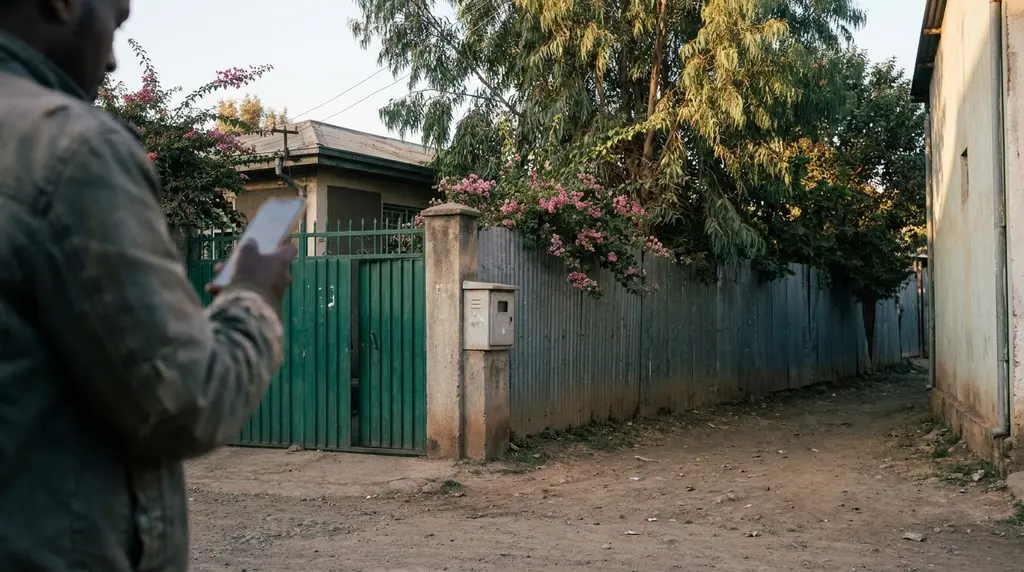
You can look after a house, a condominium or a plot of land in Ethiopia from abroad. But someone in Ethiopia has to check on it, because the law does not wait for you to come home. Property tax, utility bills, lease rules for tenants and rules on empty homes all apply while you are away. This guide sets out what the law asks of an owner and what tends to go wrong when no one checks. It also shows a routine that gives you proof each time.
We sell property visits, so read our part with that in mind. Every legal point below links to the law it comes from.
The short version
- Find out what you owe each year: property tax, and any annual lease payment for the land.
- Make sure the bills reach someone, and that someone tells you when they arrive.
- If you rent the home out, register the lease and take rent through a bank or another legal electronic payment.
- Do not leave a home or a plot empty for long without a plan.
- Have the property checked on a fixed schedule, with photos or video you can keep.
- Give the person who acts for you a power of attorney for the job. Your advocate can advise on its wording.
1. Know what you owe each year
Property tax. Ethiopia passed a new Property Tax Proclamation in 2025 (No. 1365/2025). It covers property in urban areas across the country, including Addis Ababa and Oromia, where Adama is (Articles 2 and 3). The holder of the land, whether on a lease or by old possession, or the owner of the building pays, unless exempted (Article 17).
- The tax is worked out on 25% of the property's market value (Article 2).
- The proclamation sets a range of rates, and lets them rise over four years (Article 11). The actual rate for your city is set by the city or region. We have not found a published Addis Ababa or Adama rate yet, so ask the revenue office.
- Payment is yearly or quarterly, within the Ethiopian fiscal year, as the region decides (Article 18).
- Paying late costs money. It is 5% of the unpaid tax on the next working day, then 2% for each month, up to the amount of the tax itself. Interest runs after that (Article 17).
Two rules matter most if you live abroad. Where a tax notice cannot be handed to you, it may be posted on the gate of the property (Article 20). Not receiving the notice is no excuse for not paying, and if no notice reaches you, the law says you must tell the city administration in writing (Article 20). So someone needs to look at the gate.
The old land and building tax. Until each region passes its own law under the new proclamation, the old taxes carry on. They cannot carry on for more than two years after the proclamation took effect (Article 41). It took effect when it was published in the Federal Negarit Gazette on 26 March 2025 (Article 43), so that limit falls in March 2027. Tax owed under the old laws before then can still be collected (Article 41).
Annual lease payments. If your land is held on a lease, the rest of the lease price is paid in equal yearly instalments, with interest, after a down payment (Lease Proclamation No. 721/2011, Article 20). A late instalment carries a penalty. After three years of arrears, the city may seize and sell the lessee's property (Article 20).
2. Keep the bills paid
Electricity and water can be paid by phone. Ethio telecom's telebirr app pays electricity bills with the contract account number, and water bills with a payment reference number.
These apps will not tell you that a bill has arrived, or that a notice is stuck on your gate. Someone local still needs to look. Whoever pays, ask for the receipt every time, and keep it.
3. If you rent the home out
The Rent Control and Administration Proclamation covers residential leases in towns and cities under a region, and in Addis Ababa and Dire Dawa (No. 1320/2024, Article 3). Rooms let by hotels, guesthouses and other licensed businesses do not.
- The lease must be in writing, and authenticated and registered with the city's regulator within 30 days of signing (Article 4). An unregistered lease has no effect, and the penalty can reach three months' rent (Article 4).
- A lease runs for at least two years (Article 6).
- An advance payment may not be more than two months' rent (Article 12).
- Rent may only be paid through a bank or another legal electronic payment system (Article 13). Keep the payment records with the registered lease (Article 13).
- Rent rises are limited to the yearly figure the regulator announces on 1 June (Article 8). Newly built homes, and homes rented for the first time, are outside the cap for a set period (Articles 9 and 10).
Rental income from a home in Ethiopia is taxed even when the owner lives abroad (Income Tax Proclamation No. 979/2016, Articles 6 and 7). When a rental building is finished or first rented, the owner and the builder must tell the kebele or local administration who owes the tax. They give that person's name, address and tax number (Article 17). The government's Ethiopian Diaspora Service offers help with getting a tax number (TIN).
Writing or negotiating the lease itself is work for an advocate you hire directly.
4. If it stands empty
An empty home can be damaged or occupied without anyone noticing. The law adds costs too.
- Take a home that was rented before, or a newly finished one. If it is left empty for more than six months, the law says the rent it could have earned "will be calculated and paid" (Proclamation No. 1320/2024, Article 8).
- A city short of housing may, by directive, charge an extra 25% of the property tax on separate units kept unused for more than a year (Article 10). Units in a single compound owned by one person under one title do not count as separate (Article 10).
- A region may apply the highest property tax rate to land not developed within the time allowed, and to a building not used after it is finished (Proclamation No. 1365/2025, Article 11).
- Under a land lease, failing to start or finish building on time can lead the city to take the land back (Proclamation No. 721/2011, Articles 22 and 23).
The city's rent regulator (for the rent rules) and the revenue office (for property tax) can tell you how they apply these rules.
5. Watch for encroachment and fake papers
When no one visits, a new fence on your land or a forged sale paper can go unnoticed. Two habits help.
- Have the property visited on a schedule, and keep the photos or video from each visit, so a new wall or structure shows up early.
- In Addis Ababa, the AddisLand app offers to check a title deed and to report illegal land use. Its store listing names the Ethiopian Artificial Intelligence Institute as developer and links to the city land bureau's website. Keep a scan of your title deed somewhere safe outside Ethiopia.
6. Give someone the right papers
Someone in Ethiopia will need written authority to act for you. That paper is a power of attorney. The Civil Code says a power given in general terms covers acts of management only (Article 2203). Selling or mortgaging real estate, and making gifts, need special authority (Article 2205). You can revoke a power of attorney at any time (Article 2226).
Our guides on how to send a power of attorney to Ethiopia, how to revoke or replace one and how to choose someone to handle your affairs cover the official steps. Which powers your job needs, and how to word them, is for you and your advocate.
Proclamation No. 270/2002 says Articles 390 to 393 of the Civil Code do not apply to holders of the Ethiopian Origin ID (the Yellow Card). This is subject to Article 40(3) of the Constitution on land (Article 5). How this applies to a property is a question for your advocate. Our Origin ID guide explains the card.
Where Agar fits
We do the checking and the paperwork chasing. We do not pay your bills or taxes, and we do not hold your money.
- Property visits. An agent visits your house, condominium or land on a date we agree with you. You get a video walk round and photos of anything that needs attention. Before we close the visit, we check the video for the place and the time. If the location cannot be recorded, we note why on your task.
- Bills and taxes. We get the bill or tax amount from the office and tell you how to pay it. You pay the office directly, and we file the official receipt in your account once you send it to us. If an office will only give a bill to the owner, or asks for a power of attorney, we tell you before any fee is charged.
- Reminders. Say you have an account with us and upload a passport, national ID, Origin ID, power of attorney or business licence with an expiry date. We email you 90, 30 and 7 days before it expires.
Every service fee is on our price list, and our property oversight page shows what each service includes.
Property inspection + geotagged video report: USD 55.
Our timeline is 72 hours. It runs from the visit date we agree with you to the day the video and photos are in your account.
Proof on closing: video walk round of the property, photos of anything that needs attention.
"Service fee refunded if SLA missed for causes within Agar's control."
What we do not do
We do not pay bills, rent or taxes for you. We do not find tenants, manage leases or collect rent: by law, rent is paid by bank or another legal electronic payment (Proclamation No. 1320/2024, Article 13). We do not draft or negotiate leases, or give legal or tax advice: for that, hire an advocate or an accountant directly. Nobody can make an office act sooner than it does, including us.
Sources
- Property Tax Proclamation No. 1365/2025. Taxable value (Article 2), scope (Article 3), rates (Article 11), exemptions (Article 14), who pays and penalties (Article 17), payment (Article 18), notices (Article 20), transition (Article 41), effective date (Article 43). Checked 18 October 2026.
- Rent Control and Administration Proclamation No. 1320/2024. Scope (Article 3), registration (Article 4), term (Article 6), rent price and empty homes (Article 8), new homes (Article 9), first rentals and unused units (Article 10), advance payment (Article 12), payment by bank (Article 13). Checked 18 October 2026.
- Urban Lands Lease Holding Proclamation No. 721/2011. Lease payments (Article 20), building deadlines (Articles 22 and 23). Later amended; the amendment was not checked. Checked 18 October 2026.
- Federal Income Tax Proclamation No. 979/2016. Rental income of non-residents (Articles 6 and 7), notice of a new rental building (Article 17). Amended by Proclamation No. 1395/2025; the amendment was not checked. Checked 18 October 2026.
- Proclamation No. 270/2002, rights of foreign nationals of Ethiopian origin (Article 5). Checked 18 October 2026.
- Civil Code, agency. Articles 2203, 2205 and 2226. Checked 18 October 2026.
- Ethio telecom, telebirr utility bill payment. Checked 18 October 2026.
- Ethiopian Diaspora Service, TIN service. Checked 18 October 2026.
- AddisLand app, Google Play listing updated 2 April 2026. Checked 18 October 2026.
Note: the law texts above are unofficial copies. The Federal Negarit Gazette is the official text. City and regional rules change often, so confirm current rates and deadlines with the office.
Questions people ask
How can I manage my property in Ethiopia while living abroad?
Find out what you owe each year. Make sure bills and tax notices reach someone, and have the property checked on a fixed schedule with photos or video. If you rent it out, register the lease within 30 days and take rent through a bank or another legal electronic payment (Proclamation No. 1320/2024, Articles 4 and 13). Give the person who acts for you a power of attorney for the job; your advocate can advise on its wording.
Do I have to pay property tax in Ethiopia if I live abroad?
The proclamation makes the land holder or building owner liable unless an exemption applies (Property Tax Proclamation No. 1365/2025, Articles 14 and 17). Its exemptions do not depend on where the owner lives. A notice may be posted on the gate of the property, and not receiving it is no excuse for not paying (Article 20). Ask the city or regional revenue office for your rate and due date.
What happens if I leave my house in Addis Ababa empty?
Take a home that was rented before, or a newly finished one. If it is left empty for more than six months, the rent law says the rent it could have earned will be calculated and paid (Proclamation No. 1320/2024, Article 8(10)). A city short of housing may also, by directive, add 25% to the property tax on units kept unused for over a year (Article 10). The rent regulator and the revenue office can tell you how they apply these rules.
Do I need to register a rental contract in Addis Ababa?
Yes. A residential lease must be in writing, and authenticated and registered with the city's regulator within 30 days of signing (Proclamation No. 1320/2024, Article 4). An unregistered lease has no effect, and the penalty can reach three months' rent. Writing the lease is work for an advocate you hire directly.
Can my tenant pay rent in cash?
No. Rent may only be paid through a bank or another legal electronic payment system (Proclamation No. 1320/2024, Article 13). Rent paid into your own account also leaves a record, which the law asks both sides to keep with the registered lease.
How do I protect my land in Ethiopia from encroachment?
Have it visited on a schedule and keep the photos or video from each visit, so a new wall or structure shows up early. Keep a scan of your title deed outside Ethiopia. In Addis Ababa, the AddisLand app offers to check a title deed and to report illegal land use.
Can Agar pay my property tax or utility bills?
No. We get the bill or tax amount from the office and tell you how to pay it, then file the official receipt in your account once you send it to us. You pay the office directly, so your money never passes through us.
Want someone to check on the property for you?
We visit your house, condominium or land on a date we agree, film a walk round, photograph anything that needs attention, and put it all in your account. Bills and taxes stay yours to pay: we get the amounts and file the receipts you send us.